水下长城:潘家口水库The Submerged Great Wall: Panjiakou Reservoir
山脊上的长城,水面下的村庄与旧迹。一次潜水,让地图上消失的地方重新有了轮廓。A Great Wall on the ridgeline; villages and historic remains below the reservoir. Diving brought places erased from the map back into view.
这次潘家口之行,是我的好友、GUE教练陈烜带我来的。跟着他一起探索水下长城、敌楼和语录碑,让这趟旅程有了特别的意义。
My good friend and GUE Instructor Chen Xuan brought me to Panjiakou. Exploring the submerged wall, watchtower and quotation stele with him made this journey especially meaningful.
在水面上,先看见长城如何进入山里First, the wall disappears into the mountains
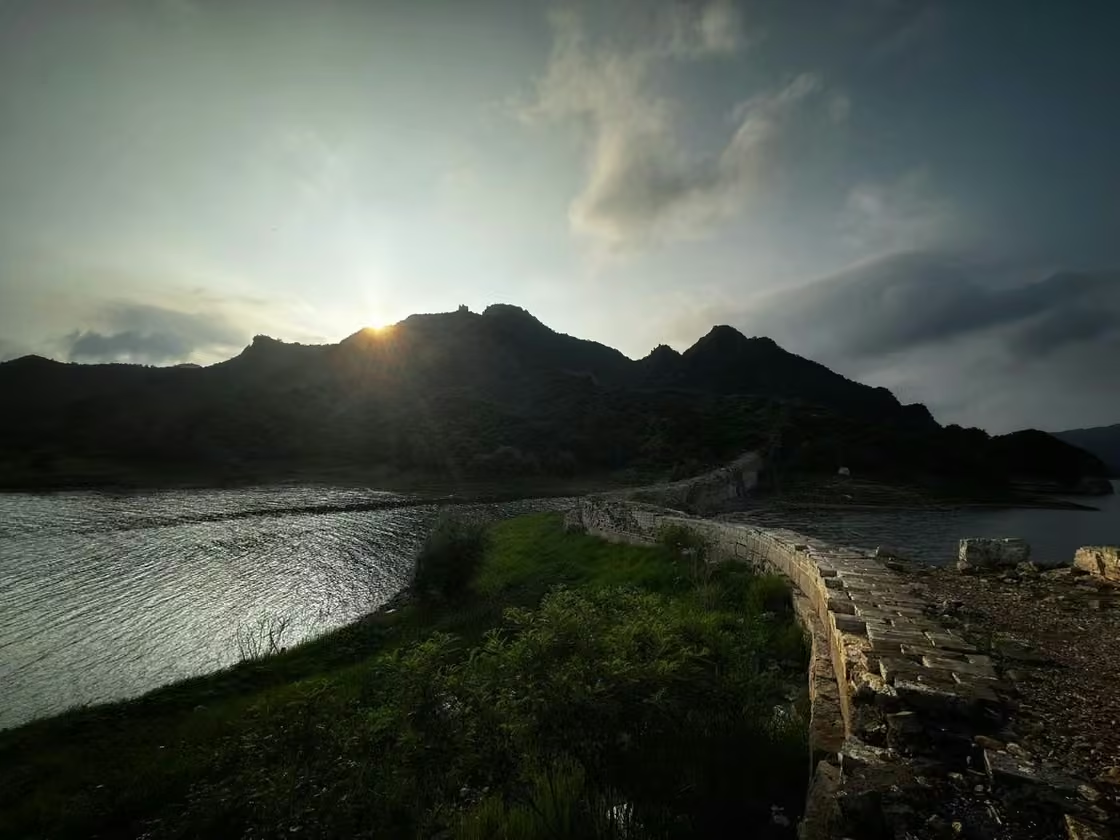
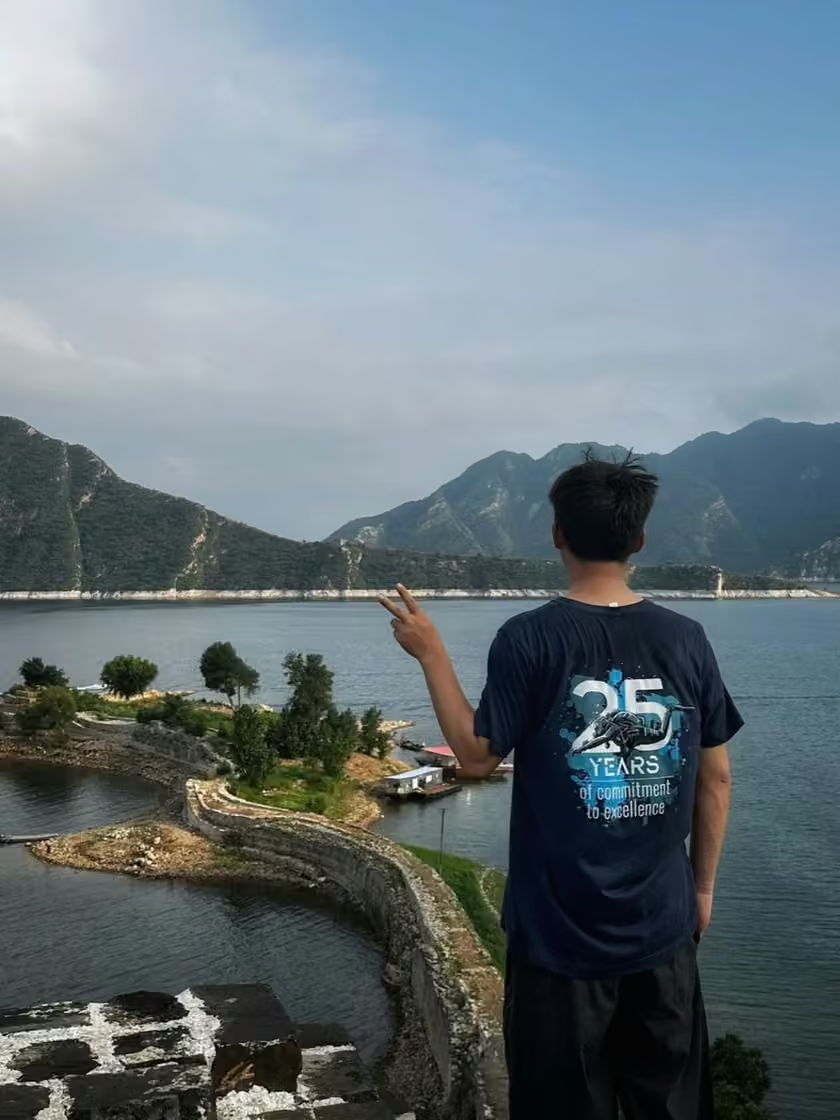
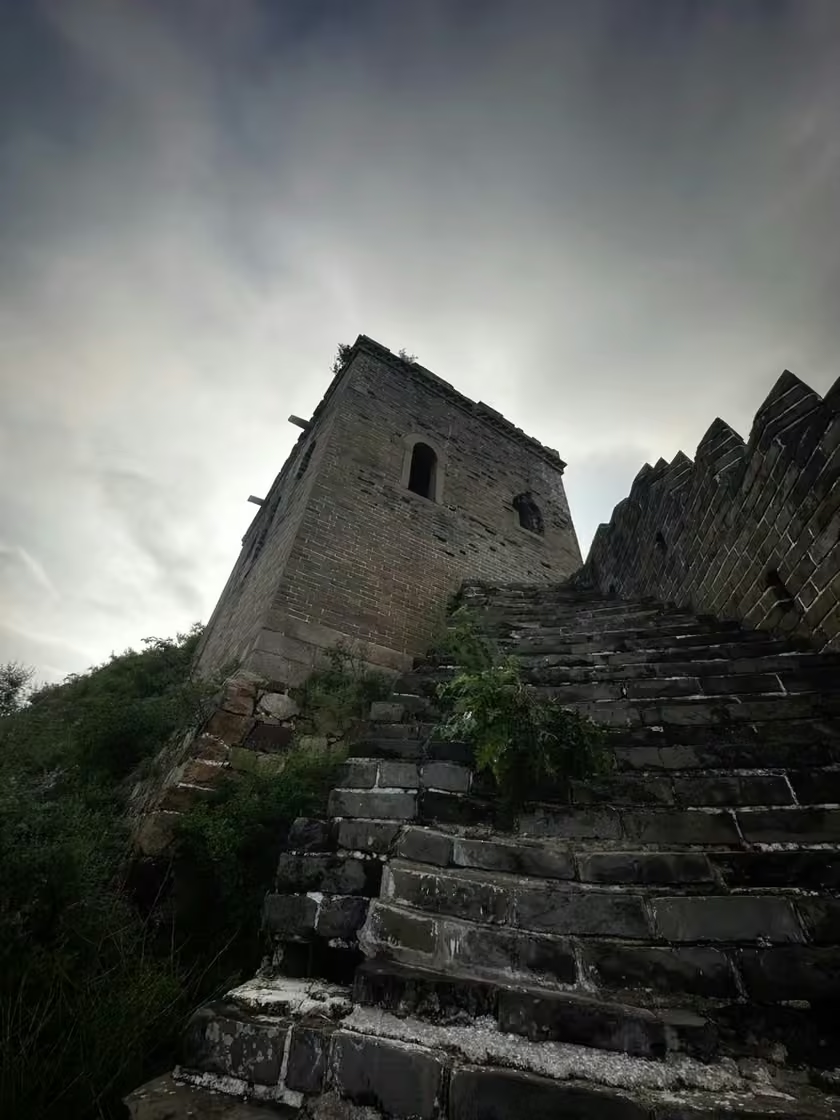
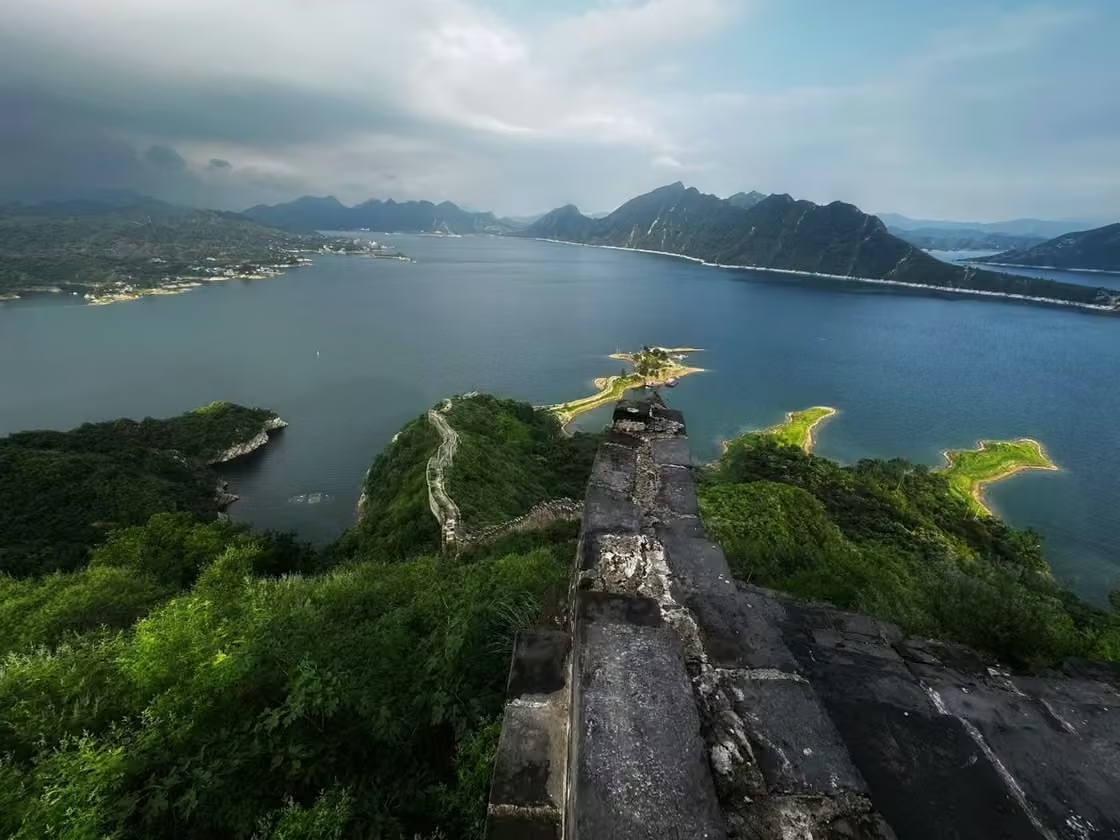
2025年7月,我来到河北潘家口水库。第一次站在岸边,最先看到的不是“水下长城”,而是山脊上仍然清晰的城墙:石阶沿着山势起伏,敌楼守在高处,水库把山谷铺展成一片开阔的水面。长城从岸上向前延伸,绕过山头,又在水边消失。
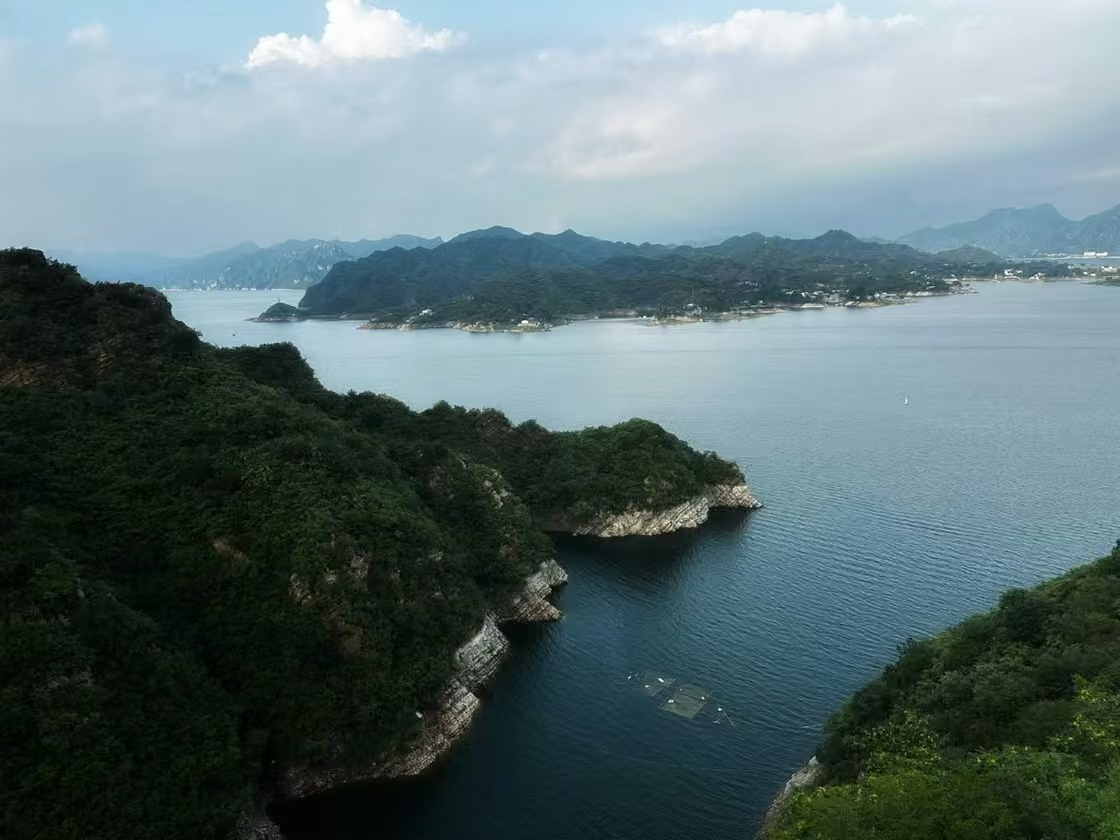
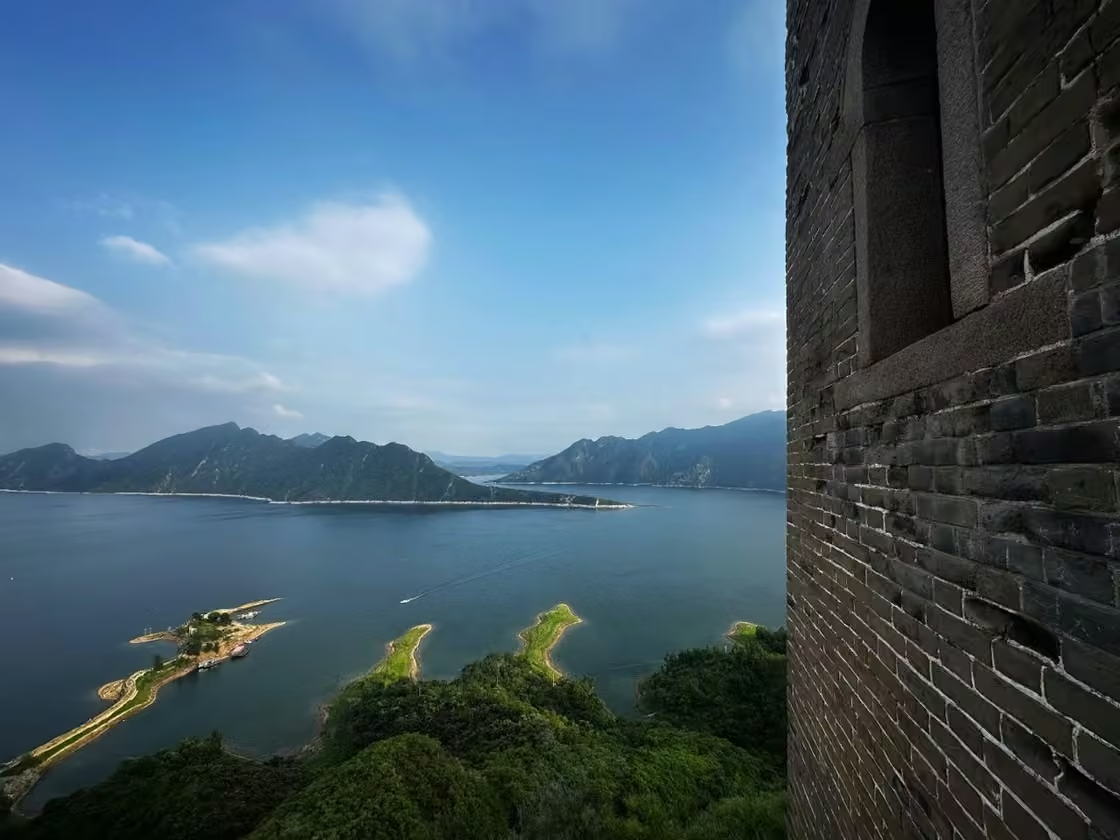
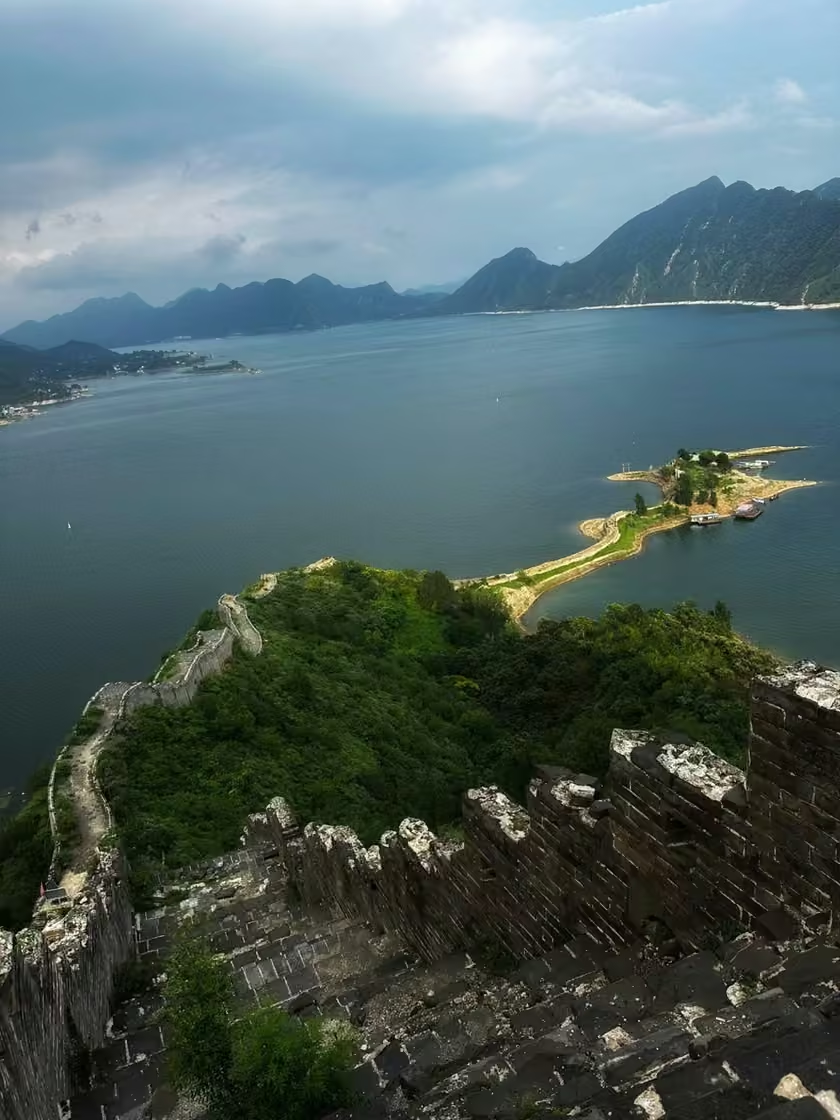
从高处望下去,水面把山体切分成一座座岛和半岛。墙体沿着山脊蜿蜒,石头、树林和水岸挤在同一幅画面里。照片里的水库看起来平静,但它的形状讲述着另一件事:这里的地貌曾被水位彻底改写。
I came to Panjiakou Reservoir in Hebei in July 2025. Standing on the shore, I did not first see an “underwater Great Wall”. I saw the wall still tracing the ridges: stone steps following the slope, watchtowers holding the high ground, and the reservoir opening across the valley. The wall runs out from the shore, bends around a hill, then disappears at the waterline.
From above, the water divides the mountains into islands and peninsulas. The wall threads along the ridges, bringing stone, forest and shoreline into one frame. The reservoir looks calm in these photographs, but its outline tells another story: the water changed the map here.
长城不只在水下,岸上也依然立着The Great Wall is not only underwater
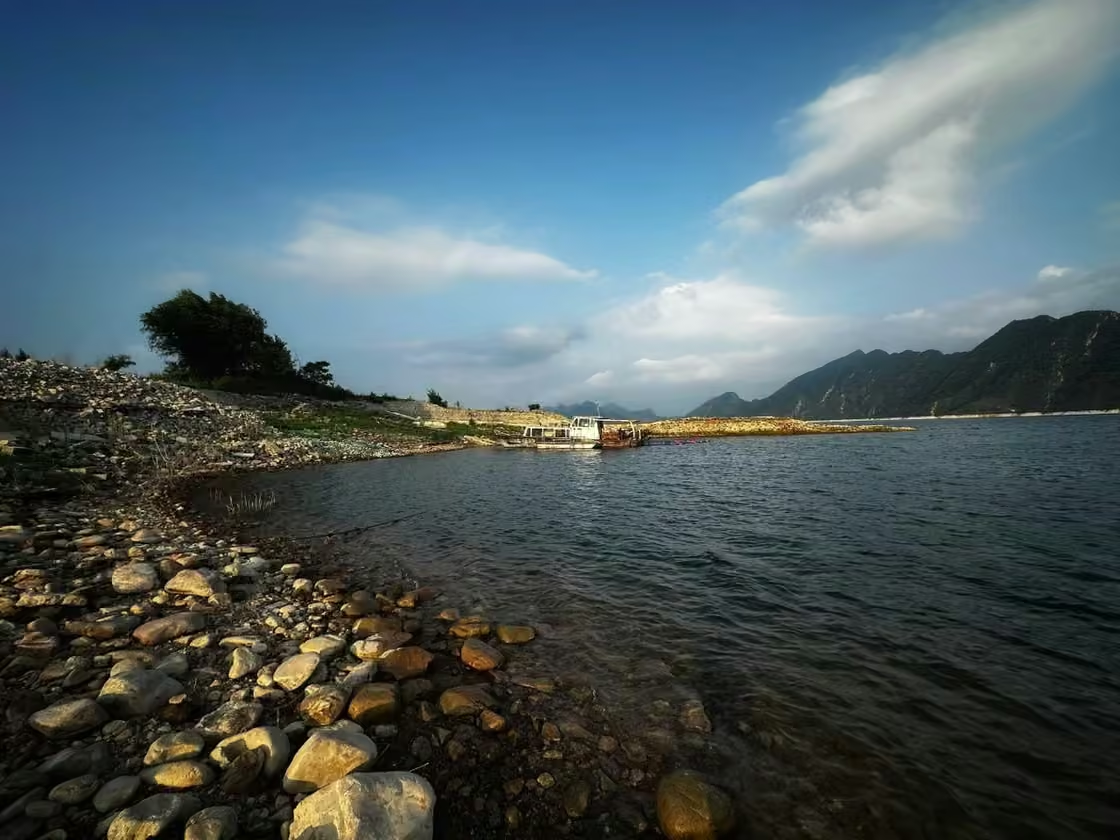
潘家口水库在上世纪七十年代修建,约在1980年前后开始蓄水。随着水位上升,潘家口镇及周边村落、古道和部分长城遗迹沉入水下。曾经连接山谷两岸的道路和桥,也渐渐从人们的日常视野里消失了。
今天,这里常被称为“水下长城”。这个名字容易让人想到一整段城墙都沉在水底;实际看到的景象更复杂:一部分长城仍沿山脊露出水面,一部分在岸边断开,还有一些旧迹已经落在潜水员的灯光范围里。水面上下不是两个分开的世界,而是同一段地貌的前后两页。
Panjiakou Reservoir was built in the 1970s and began filling around 1980. As the water rose, Panjiakou town and nearby villages, old roads and sections of the Great Wall were submerged. Paths and a bridge that once connected the valley gradually disappeared from everyday view.
The area is now often called the “Underwater Great Wall”. The name can suggest that an entire stretch of wall lies beneath the water, but the landscape is more layered: some sections remain on the ridges, others break off at the shore, and some traces now sit within a diver’s reach. Above and below the water are two pages of the same terrain.
桥墩、敌楼与一块刻字的石碑Bridge piers, a watchtower and an inscribed stele
这趟潜水沿着旧遗迹展开。潘家口大桥已不复存在,只剩下桥墩。根据我的潜水记录,我们在约57米深处看到了它们。1977年的老照片里,桥还横跨山谷;多年以后,桥面消失了,留下来的桥墩像一段没有说完的句子。
被称作“八楼”的敌楼位于约26米深处。它原本建在山脊上,是明长城防线的一座瞭望敌楼。水库蓄水后,长城随水位上升沉入水下;砖墙、门洞和女墙在灯光里仍然可辨。潜水时间有限,没能把每一处细节都看完,但能看出建筑的轮廓还在。
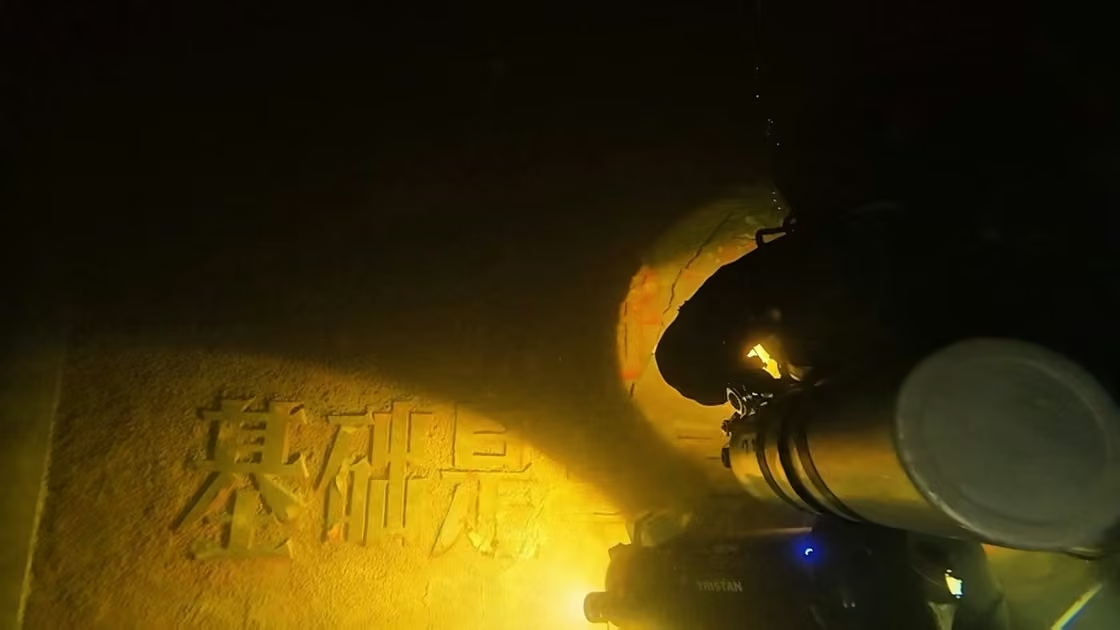
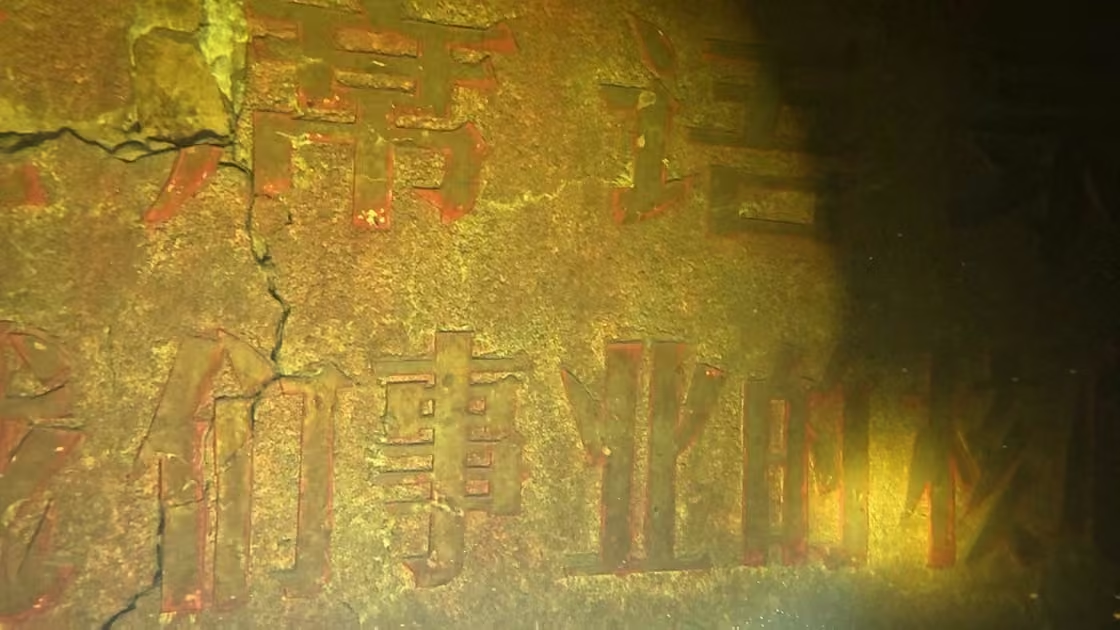
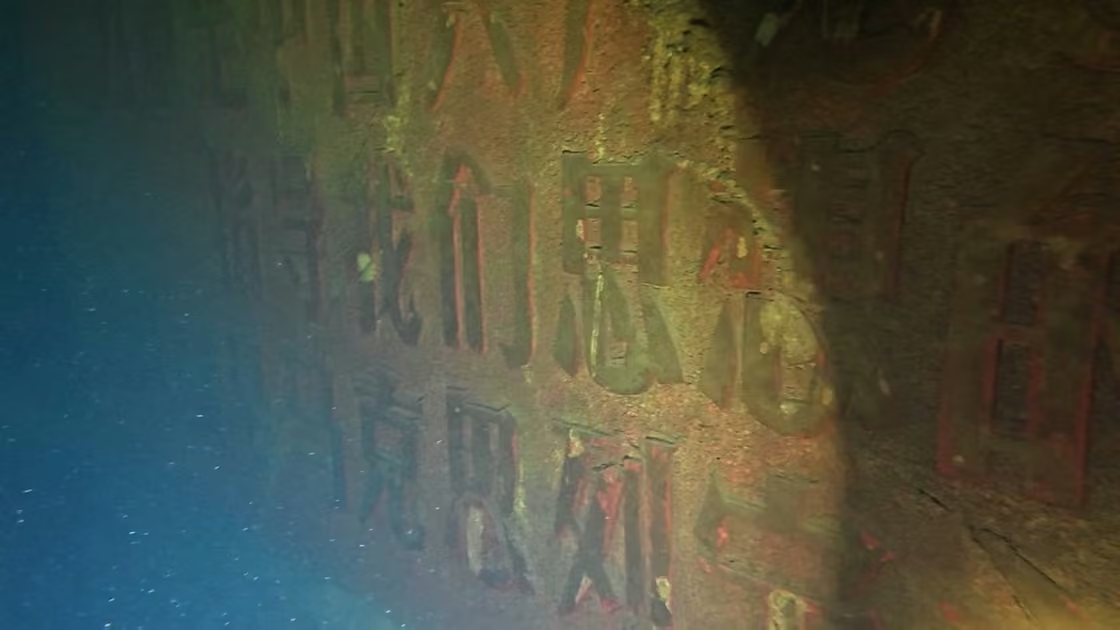
更深处还有一块语录碑,约在45米。它曾立在潘家口老村一带,后来随水库沉入水下。潜到碑前时,灯光打在刻字上,碑面从黑暗里浮现出来,那一刻很像《2001太空漫游》里的黑石:陌生、安静,也让人意识到自己正在触碰一段真实的历史。
The dives followed the traces left by the old settlement. Panjiakou Bridge is gone; only its piers remain. According to my notes, we saw them at around 57 metres. A 1977 photograph shows the bridge crossing the valley. Years later, the deck had vanished, leaving the piers like the unfinished end of a sentence.
The watchtower known as “Balou” lies at around 26 metres. It once stood on the ridge as part of the Ming-era defensive line. After the reservoir filled, the wall sank with the rising water. Brickwork, doorways and parapets can still be made out in a torch beam. Our bottom time was limited, so there was more to see than we could take in.
Deeper down is an inscribed quotation stele, at roughly 45 metres. It once stood near the old Panjiakou village before the reservoir submerged it. When the torch caught the carved words, the stone emerged from the dark like the black monolith in 2001: A Space Odyssey—strange, still, and a reminder that this was a real place in someone’s life.
灯光扫过,刻字从黑暗里出现The inscriptions emerge as the light passes
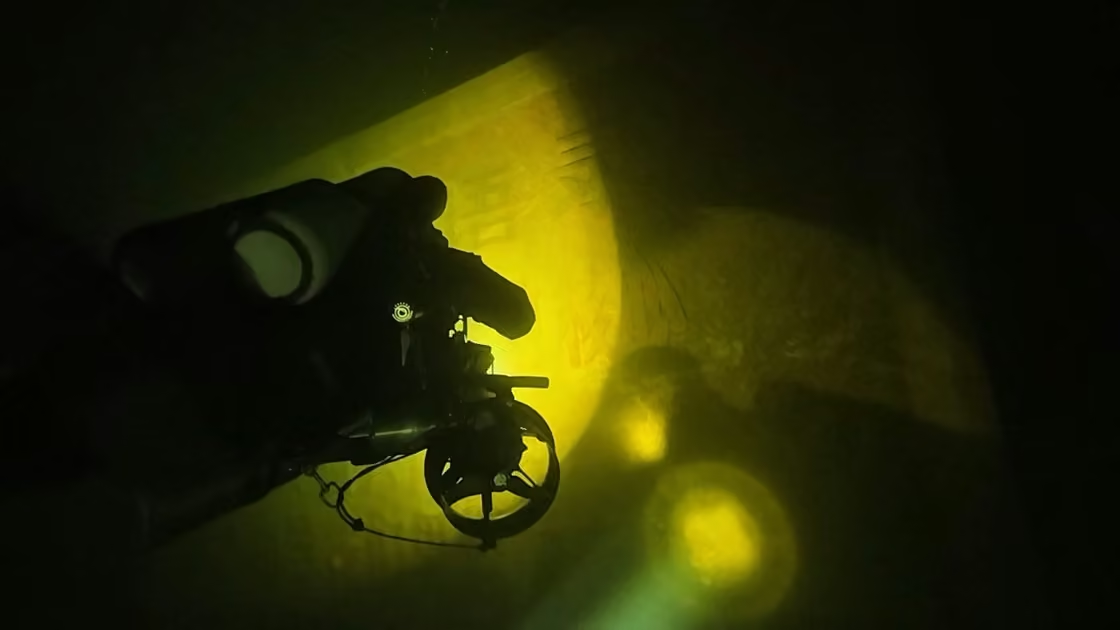
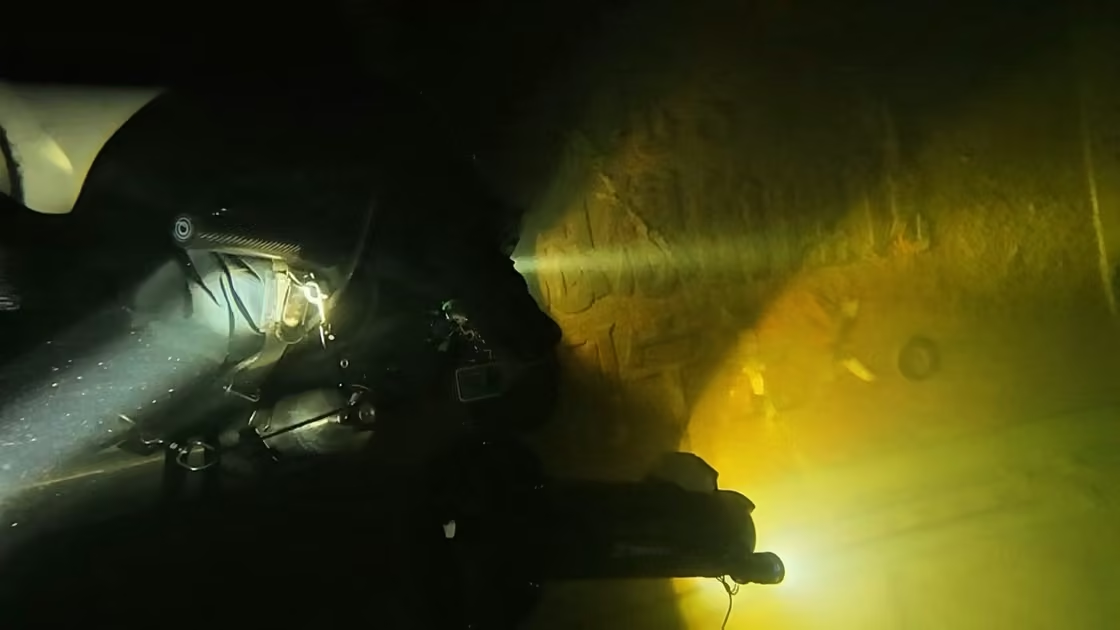
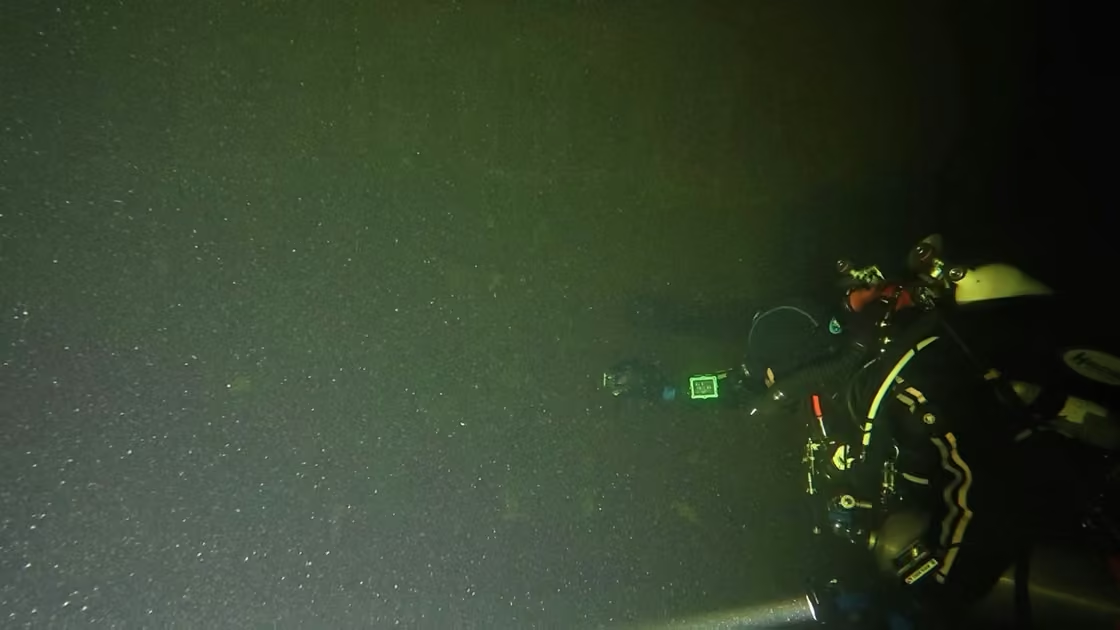
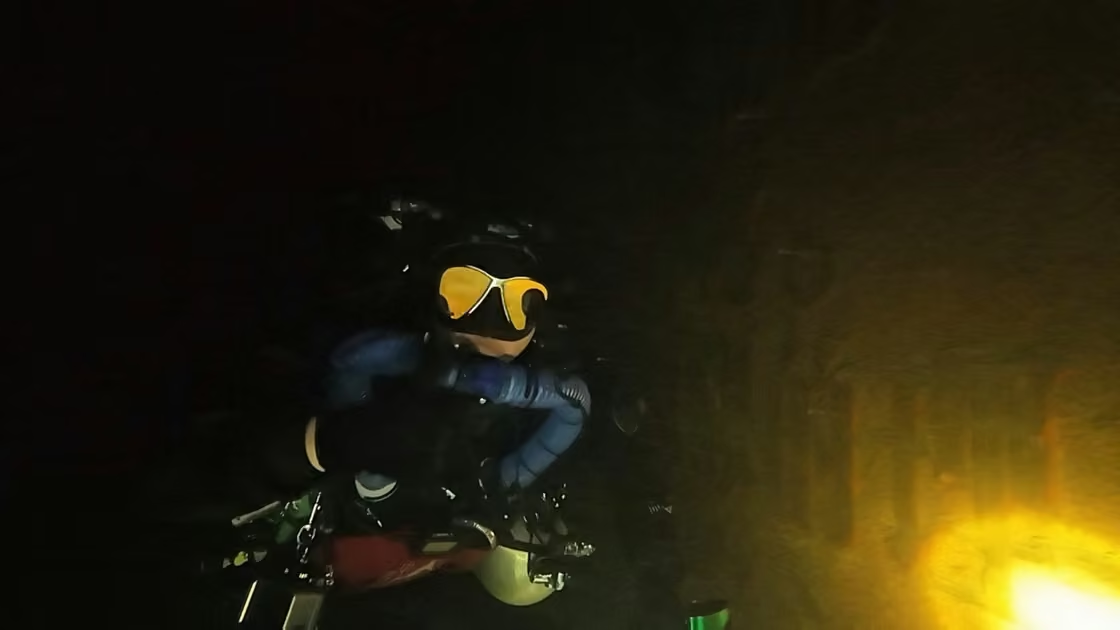
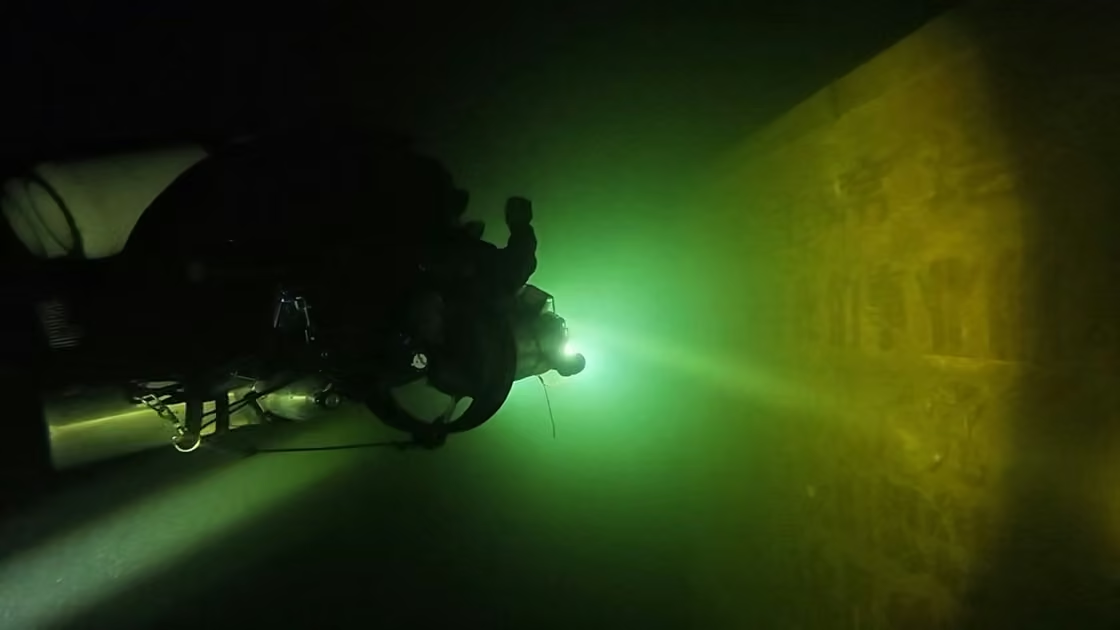
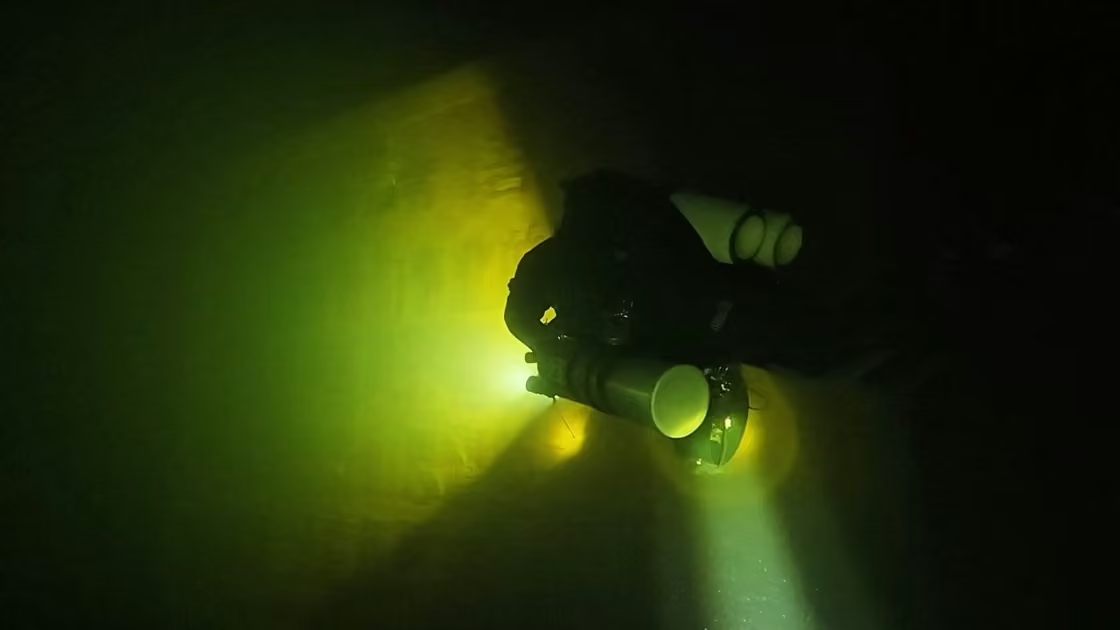
这组照片记录的是约45米深处的语录碑。这里的能见度有限,石碑并不会一下子完整地出现在眼前;潜水员的灯光从不同方向扫过,先照出碑面,再慢慢显出凹凸的字和斑驳的红色。几束光落在同一面石墙上,周围仍是一片暗色。
近看时,刻字比远处看起来更大,也更有重量。石面有裂纹、缺口和沉积的痕迹,文字仍然留在原处。潜水员在旁边经过,能让人感受到碑的尺度;但他们的灯也提醒我,眼前能看见的只是水下遗址的一小部分。
These photographs show the quotation stele at around 45 metres. Visibility was limited, so the whole stone did not appear at once. Divers’ lights crossed it from different directions: first revealing the face of the stele, then the raised characters and patches of faded red. Several beams met on the same wall, with darkness still all around.
Up close, the carved letters felt larger and heavier than they did from a distance. Cracks, missing pieces and sediment marked the surface, while the words remained in place. A diver passing beside the stele gives a sense of its scale; the lights also remind me that we can see only a small part of what lies below.
同一座水库,也有不同的尺度One reservoir, different scales
深处水温大约5至7℃。在这样的冷水里,装备、潜水计划和团队配合都不能马虎。每一段路线都要提前想好,回程也要留出余量。这里不像热带海域那样色彩缤纷、鱼群成群,能吸引你的注意力;更多时候,眼前只有岩石、砖墙、沉积物,以及灯光能照到的那一小块空间。
水下也不全是沉重的历史。在约7至9米的浅处,我们路过一间小宅子,周围生态不错,能看到小鱼和小虾。那里的水温约20℃,和深处仿佛是两座不同的水域。上面是青山和水库,下面有桥墩、有敌楼、有老村的痕迹,也有仍在生活的小生灵。
At depth, the water was around 5–7°C. In conditions this cold, equipment, dive planning and teamwork all matter. We planned each section carefully and left room for the return. Unlike a tropical reef, this place does not fill your view with colour and schools of fish. Often there is only rock, brick, silt and the small patch of space reached by a torch.
But the reservoir is not only a solemn record of the past. In shallower water, around 7–9 metres, we passed a small house with a healthy patch of life nearby—little fish and shrimp. The water there was about 20°C, almost another environment compared with the cold depths. Above are green hills and open water; below are piers, a watchtower, traces of a village, and small creatures still going about their lives.
潜水记录:桥墩约57米;八楼敌楼约26米;语录碑约45米;浅水宅子约7–9米。深处水温约5–7℃,浅处约20℃。Dive notes: bridge piers around 57 m; Balou watchtower around 26 m; quotation stele around 45 m; shallow house around 7–9 m. Water was about 5–7°C at depth and about 20°C in the shallows.
一段长城,两种观看方式One wall, two ways of seeing it
白天走在长城上,能看到山谷、岛屿和水面;潜到水下,才知道这片风景还包含那些已经不在岸上的桥、村庄和建筑。水面把两种观看方式隔开,也把它们连在一起。每当浮出水面,眼前的山和城墙仍在那里,只是现在我知道,水下也有一条看不见的路线。
潘家口的吸引力不只是“能潜到水下长城”。真正让人记住的,是同一个地方同时拥有露出水面的城墙和被水淹没的旧迹;是一个小宅子旁的鱼虾,和深处静静立着的桥墩;也是今天的水库风景与曾经生活在山谷里的人们之间那段很长的时间。
Walking along the wall, you see the valley, islands and open water. Diving below reveals that the view also includes bridges, villages and buildings no longer on the shore. The surface separates these ways of seeing, and joins them too. Each time I surfaced, the mountains and wall were still there—but now I knew an unseen route continued beneath the water.
Panjiakou stays with me for more than the chance to dive the Great Wall. It is a place where the wall above the water and the remains below belong to the same landscape; where fish and shrimp live beside a small house, while bridge piers stand quietly in the cold depths; where today’s reservoir holds a much longer history of people who once lived in this valley.
潘家口水库系列记录Panjiakou Reservoir series
以下链接指向这次行程的五篇中文笔记。These links lead to five Chinese-language posts from the trip.
- 《建党节读一读水底的语录碑吧》Read the underwater quotation stele for Party Founding Day
- 《水下长城八楼,明朝最后的哨岗》Balou on the Underwater Great Wall: The Ming Dynasty’s Last Watchpost
- 《语录碑就像2001太空漫游的黑石》The quotation stele is like the monolith in 2001: A Space Odyssey
- 《大桥已在历史中消逝,只剩桥墩》The bridge has disappeared into history; only its piers remain
- 《减压路过一个小宅子,生态不错》A decompression stop at a small house with thriving life